
Getting a positive drug test result when you haven’t taken any drugs is more common than most people realise – and it can be a stressful experience, especially when a job, licence, or professional reputation is on the line. The good news is that false positive drug tests are a recognised issue, and there are legitimate, well-documented reasons why they happen.
Understanding the cause is the first step to challenging the result or protecting yourself before your next test – and if another test is on the horizon, the Ultimate Detox Cleansing Drink gives you a reliable way to make sure it doesn’t happen again.
A false positive drug test occurs when a test returns a positive result for a substance that isn’t actually present in your system – or at least, not in the form the test is designed to detect. It doesn’t mean the test is completely broken, but it does mean the result cannot be taken at face value without further investigation.
False positives most commonly occur on immunoassay screening tests, which are the quick, cost-effective tests used for most workplace and pre-employment screening in the UK. These tests work by detecting chemical structures, and certain everyday substances share enough of a chemical resemblance with drug metabolites to trigger a reaction.
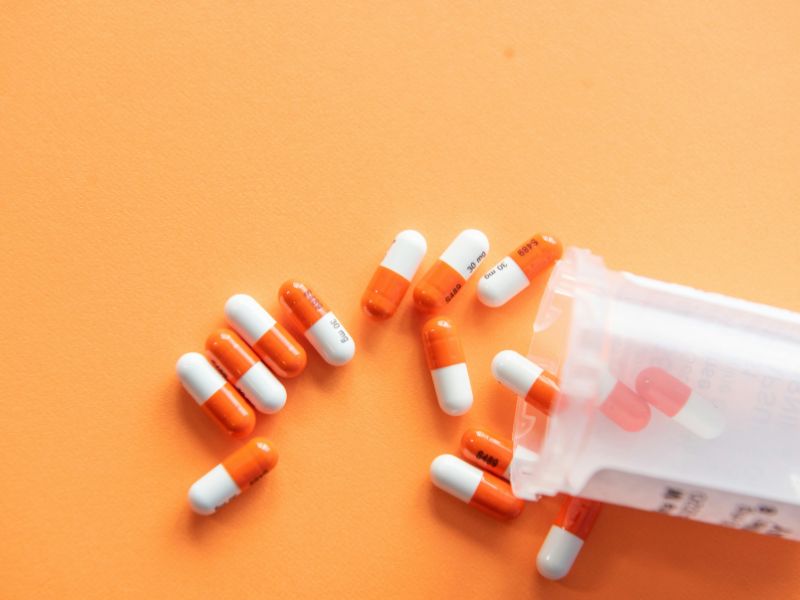
This is by far the most frequent cause of a false positive result. A range of widely used, over-the-counter and prescription medications can interfere with standard drug test screening, including:
If you’re taking any regular medication – prescribed or otherwise – it’s worth flagging this before your test wherever possible.
It sounds unlikely, but what you eat and drink in the days before a test can genuinely affect the result. Poppy seeds, commonly found on bread and pastries, contain trace amounts of morphine and can produce a positive result for opiates. Tonic water contains quinine, which has also been associated with opiate false positives in some test formats.
If you’ve spent time in an enclosed space where cannabis was being smoked, there is a small but real possibility that passive inhalation could contribute to a positive result – though this is more likely to be a factor with heavy, prolonged exposure rather than brief or occasional contact.
Not all false positives come down to cross-reactivity. Errors can occur at the point of testing or processing – sample mix-ups, incorrect paperwork, improper storage, or procedural mistakes in the laboratory. This is one of the reasons a positive immunoassay result should always be confirmed with a more specific test, such as a Gas Chromatography/Mass Spectrometry (GC/MS) test, before any serious action is taken.
You have the right to request that a positive result is confirmed by a secondary, more specific test. A GC/MS test is significantly more accurate than an immunoassay screen and is far less susceptible to cross-reactivity. If your initial result was genuinely a false positive, a confirmatory test should clear it.
If you are taking any medication – including over-the-counter products – make a note of everything you’ve taken in the days leading up to the test. This information can be crucial when challenging a result, as it provides a credible, evidence-based explanation for the positive reading.
In the UK, a positive drug test result alone is not automatic grounds for dismissal. Employers are expected to follow a fair process, which typically includes offering a confirmatory test and giving you the opportunity to provide an explanation. Our guide to drug testing at work and how to pass covers your rights in more detail.

If you know you’re facing a test and are concerned about medications or other substances you’ve consumed, there are steps you can take. Being upfront with the medical review officer (MRO) about any prescribed or over-the-counter medication before the test is the most straightforward route.
It’s also worth understanding the different types of drug tests you might face – some are more prone to false positives than others, and knowing which type is being used gives you a clearer picture of your risk.
If you’re concerned about your result ahead of time, using a multi-panel drug testing kit to check your own urine before the official test gives you advance warning and time to act. If cannabis cross-reactivity is your main worry – from ibuprofen or passive exposure – a dedicated cannabis drug testing kit will give you a faster, more specific answer.
You can also find detailed information on drug detection times in urine to help you understand what your body may or may not still be carrying.
A positive drug test result is not always the end of the story. False positives are a documented, well-understood phenomenon – caused by everyday medications, certain foods, procedural errors, and cross-reactive substances. If you believe your result is incorrect, you have grounds to challenge it, and a confirmatory test is the most effective way to do so.
The most common triggers behind a false positive result are:
For more detail on the specific substances known to cause cross-reactivity, do get in touch with our team on enquiries@ultimatedetox.co.uk or call 0333 339 0345, where we will be happy to help.
What is a false positive drug test?
A false positive drug test is when a test returns a positive result for a drug that isn’t actually present in your system in the way the test is measuring. It most commonly occurs on immunoassay screening tests, where everyday substances share a similar chemical structure to drug metabolites and trigger a reaction.
Can ibuprofen cause a false positive drug test?
Yes. Ibuprofen has been known to cause a false positive for cannabis on certain immunoassay test formats, even when taken in normal doses. If you’ve taken ibuprofen recently before a test, it’s worth mentioning this to the tester or medical review officer.
Can you fail a drug test from eating poppy seeds?
Yes, in some cases. Poppy seeds contain trace amounts of morphine and can produce a positive result for opiates on a standard immunoassay screen. The likelihood depends on the quantity consumed and the sensitivity of the test being used.
What should I do if I think my drug test result is a false positive?
Request a confirmatory test – ideally a GC/MS test, which is far more specific and far less prone to cross-reactivity than a standard immunoassay screen. Document any medications or foods you’ve consumed recently and raise this with the testing officer or your employer’s HR team.
Are false positives common on workplace drug tests?
They are more common than many people expect, particularly on initial immunoassay screening tests. This is why a positive result from a screening test should always be confirmed with a more accurate secondary test before any formal action is taken.
Can passive smoking cause a false positive for cannabis?
In most cases, brief or incidental passive exposure to cannabis smoke is unlikely to produce a positive result. However, prolonged exposure in an enclosed environment can, in some circumstances, result in detectable levels. If you believe this may be a factor, raise it when discussing your result.

